
Brand teardownsSupplements & wellness
8 products.
5 years.
$100M.
Arrae is the wellness brand every operator keeps asking about — a husband-and-wife bootstrap that turned a jar called Bloat into a nine-figure machine. We pulled their sales data, their ads, and their storefront. Here’s the teardown.
Start reading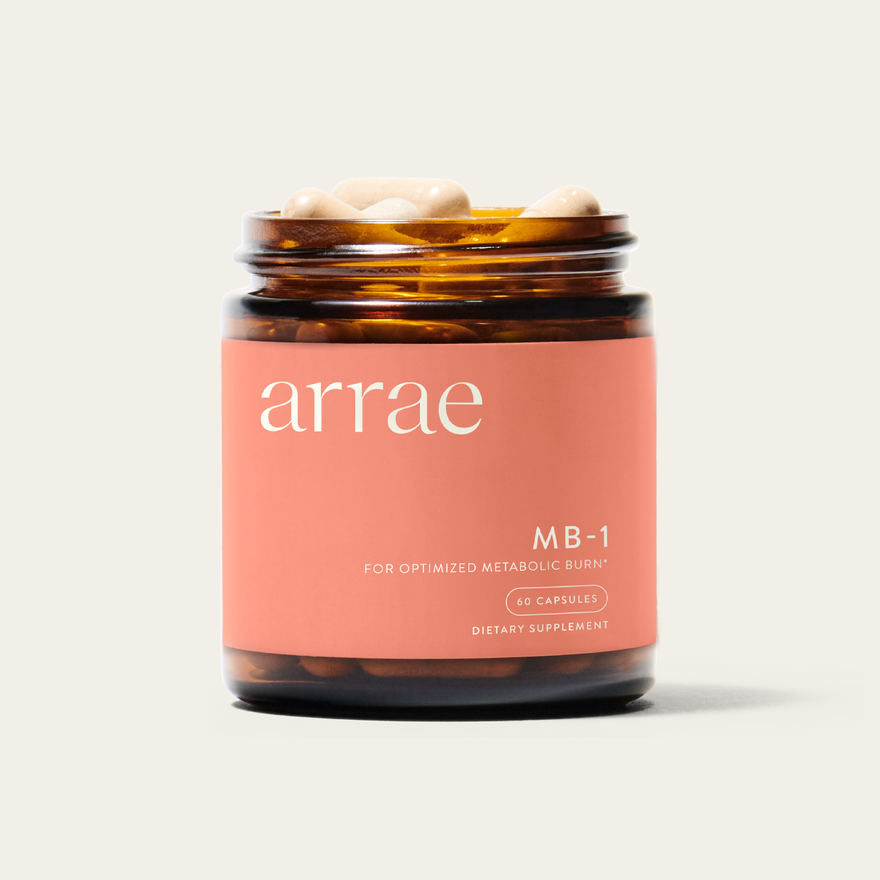
- Revenue by 2026
- $100M
- Launch to 9 figures
- 5 yrs
- Core products
- ~8
- Active Meta ads
- ~840
- Avg order tracked
- ~$130
- Jars of Bloat
- 5M+
The idea
A brand with barely eight products outsells companies carrying two hundred. That’s the first thing that should stop you about Arrae.
Most founders treat growth as a catalog problem — launch more, list more, chase every trend. Arrae did the opposite: stayed brutally small, picked perfect moments, and built a system where every product pulls its weight. What follows is the full teardown — the same way we’d tear down a funnel — so you can lift the mechanics into your own brand.
By the end you’ll know the exact seven plays behind the run from $4,000 in month one to $100 million in five years — each with a “steal this” you can run tomorrow.
Two people, a spare bedroom, and their wedding money.
Arrae launched in March 2020: Nish Samantray and Siff Haider, a married couple who funded it with their own savings — including money set aside for their wedding. Siff came from lifestyle content; Nish from fintech. Two products at launch: Bloat and Calm.
Month one did about $4,000. Nine months later they crossed $1 million — no outside capital. Five years later: $100M+. The through-line every case study repeats:
“Just eight products. Ruthless discipline. And the perfect timing.”The recurring summary of the Arrae story
The receipts — tracked daily sales
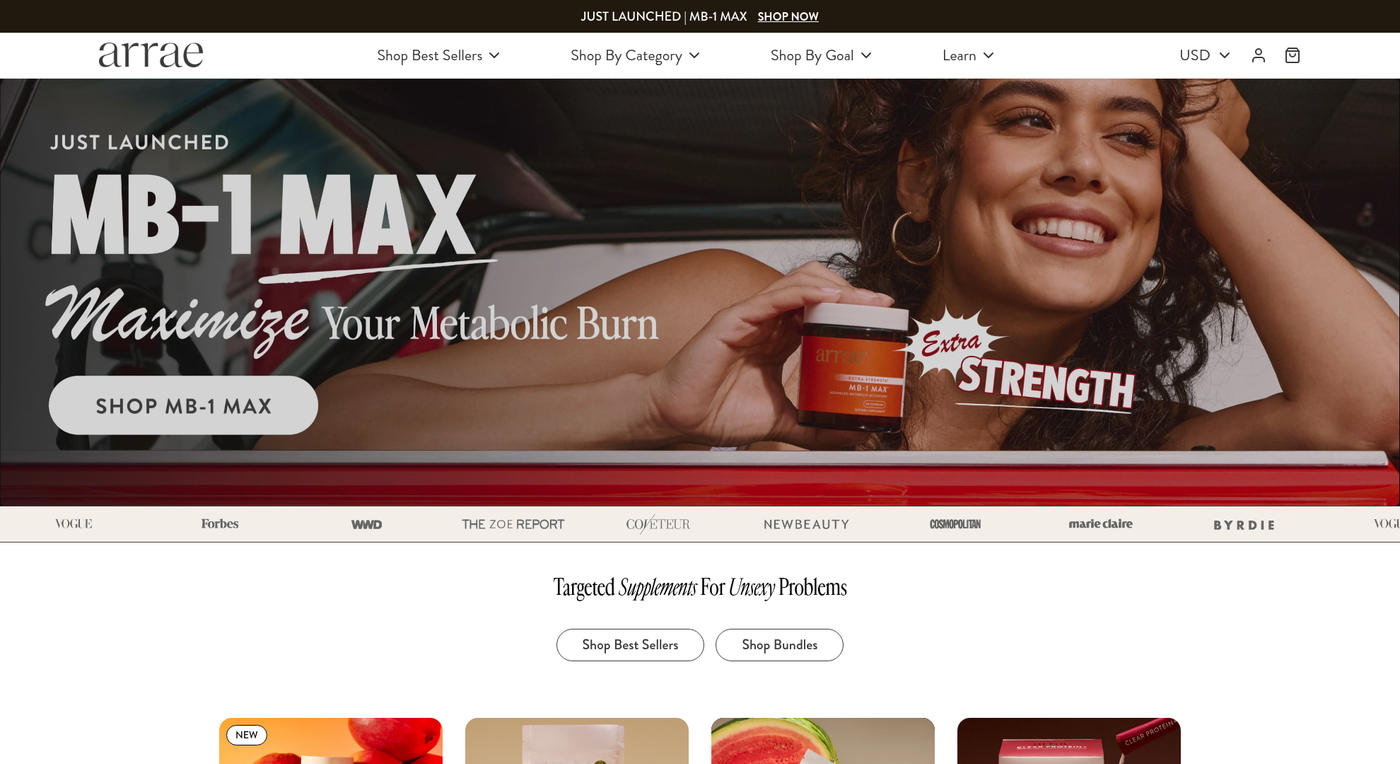
Fluid Intelligence Desk · July 2026 · USDTheir storefront, captured live.
The plays
Seven moves behind Arrae.
Move 01 of 07
Sell the symptom, not the supplement
Their hero isn’t a “digestive enzyme complex.” It’s called Bloat — the exact word a customer types into Google at 9pm feeling miserable. The name matches the problem in the customer’s own language, so the product sells itself before one ingredient is explained. That SKU has moved over 5 million jars and sits on shelves at Target, GNC, Vitamin Shoppe and Dermstore.
Move 02 of 07
Stay ruthlessly small on purpose
While competitors sprawl into 200 SKUs, Arrae hit $100M on roughly eight. When a product didn’t earn its place — like an all-natural heartburn line that couldn’t win a commodity category — they killed it. Fewer products means every launch gets the brand’s full weight, inventory stays simple, and the customer is never confused about what to buy. Focus isn’t a limitation. It’s the strategy.
Move 03 of 07
Surf the biggest wave — in the customer’s words
When the internet started talking about Ozempic, Arrae didn’t fight the trend or ignore it. They launched MB-1 and marketed it as the “all-natural fauxzempic.” Same move as Bloat: take the phrase already living rent-free in the customer’s head and put it on the box. Their actual ad copy, pulled this month:
Perfect timing plus the customer’s exact language is how a $65 supplement rides a pharmaceutical megatrend all the way to the homepage hero you saw above.
Move 04 of 07
Sell systems, not bottles
Here’s where the money is made. Arrae rarely sells one $65 jar. The tracked average order sits around $130 because the catalog is engineered so the natural landing spot is a named, benefit-driven system — and the receipts show it working: Lean & Define was the #1 product on July 5 at ~$584K in a single day.
Move 05 of 07
Launch like a media company
Pull Arrae’s activity feed and you see something wild: a new product, collab, promo or event almost every single day. They also ladder formats relentlessly — the viral Bloat capsule became gummies; creatine became a three-flavor sour variety pack; the launch did $1M on day one. Every drop is a fresh ad angle, a reorder trigger, and another shot at going viral — off the same tiny catalog.

One tracked week. Six manufactured moments. A brand with ~8 products behaving like it has fifty.
Move 06 of 07
Climb the channel escalator — in order
The part almost nobody gets right. Arrae didn’t blast every channel at once. They unlocked them in stages, each one funding the next:
Retail wasn’t vanity — it was a halo. An $8M inventory bet on a nationwide Target launch (five consecutive endcaps) put the jars in front of millions, and every ad, search and DTC visit converts better because of it. Distribution became marketing.
Move 07 of 07
Treat creative like inventory
The founders’ line: “Direct response gets the sale. Brand makes people feel.” The direct-response half is industrial. The Meta Ad Library shows roughly 840 active ads at once — volume in the league of giants like Huel, off eight products. And look at what those ads actually are — here’s one creator, one car, three different hooks, all running simultaneously as partnership ads from the creator’s own handle:



On top of the machine, the brand moments that build a cult: giveaways and collabs (their LIAISON giveaway pulled ~5,900 likes — 17x their average), a Pamela Anderson midlife-wellness partnership, an LA café takeover that did millions of impressions with zero ad spend. It shows up in the data: their posts pull more comments than likes — the signature of a community, not an audience.
The trade-offs
The “fauxzempic” play is a lever and a liability.
Be clear-eyed. The “all-natural fauxzempic” angle is brilliant marketing and genuinely risky positioning. Real GLP-1 drugs are backed by trials on thousands of patients; MB-1, critics note, has no published clinical trial on the finished product, and nutrition experts have called the comparison misleading. Weight-loss and drug-adjacent claims are exactly what the FTC and FDA scrutinize. The lesson isn’t “don’t be bold” — it’s that trend-jacking a medical category buys attention and exposure. Run the play with defensible claims and honest asterisks.
The Arrae playbook on one screen.
- Sell the symptom. Name the hero after the problem the customer already searches.
- Stay small on purpose. ~8 products. Kill the losers, feed the winners.
- Surf the wave in their words. “Fauxzempic” on the box, not jargon.
- Sell systems, not bottles. Benefit-named duos + subscription → ~$130 AOV.
- Launch like media. A drop, collab or event nearly every day.
- Climb the escalator. Influencer → paid + CRO → TikTok Shop → Amazon → retail.
- Creative is inventory. ~840 live ads; 1 shoot → 3 hooks; creators’ own handles.
Keep reading.
All teardowns
Ready when you are
Put these playbooks to work.
Bring us the brand you’re building. We’ll show you what the launch, the offer, and the field could look like in Fluid.
Book a demo